Backup and Restore VMware VCSA 6.5

With the release of vSphere 6.5, the VCSA has had a built-in and convenient way easily backup the configuration, inventory and even historical data right from the VAMI and directly into a TAR bundle. VMware has also made restoring the VCSA from a backup just as easy as well.

Below are quick and dirty steps to backing up and restoring your VMware VCSA!

How to backup VMware VCSA 6.5

  1. Log into the VCSA VAMI by opening your browser and going to, https://FQDN-of-VCSA:5480
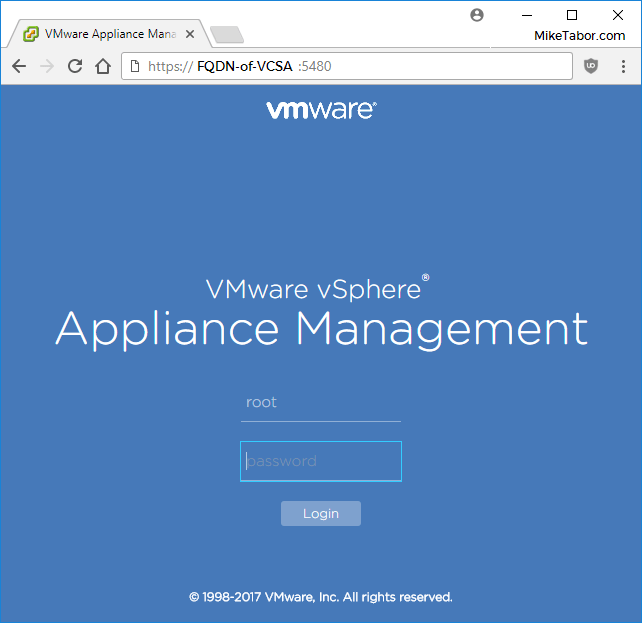
    VMware VCSA backup login
  2. On the Summary page, click the “Backup” button to start.
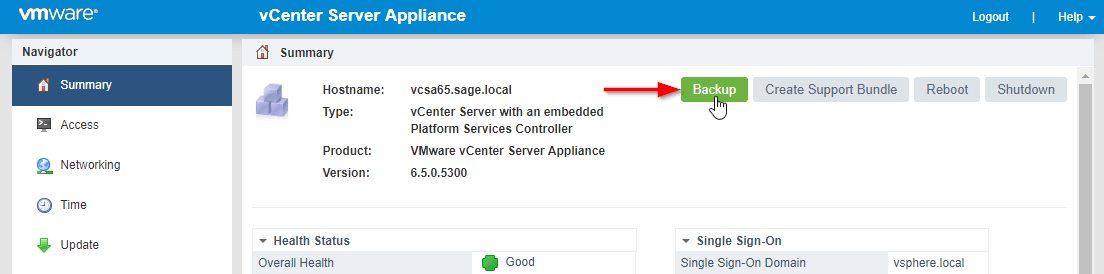
    VMware VCSA backup button
  3. Now select which protocol you want to use for the backup (HTTPS, HTTP, SCP, FTPS, or FTP), then enter your location (server address and folder), port, username and password. You can also select to encrypt the backup and if checked you will also be prompted to enter a password for the backup. Then click on Next.
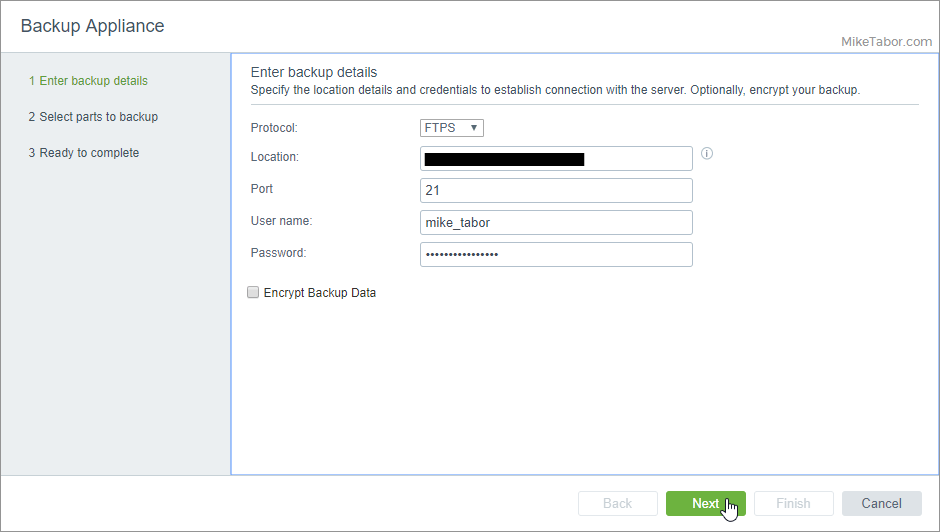
    VCSA backup credentials
  4. Finally select which parts of your VMware VCSA you want to backup then click on Next and then Finish.
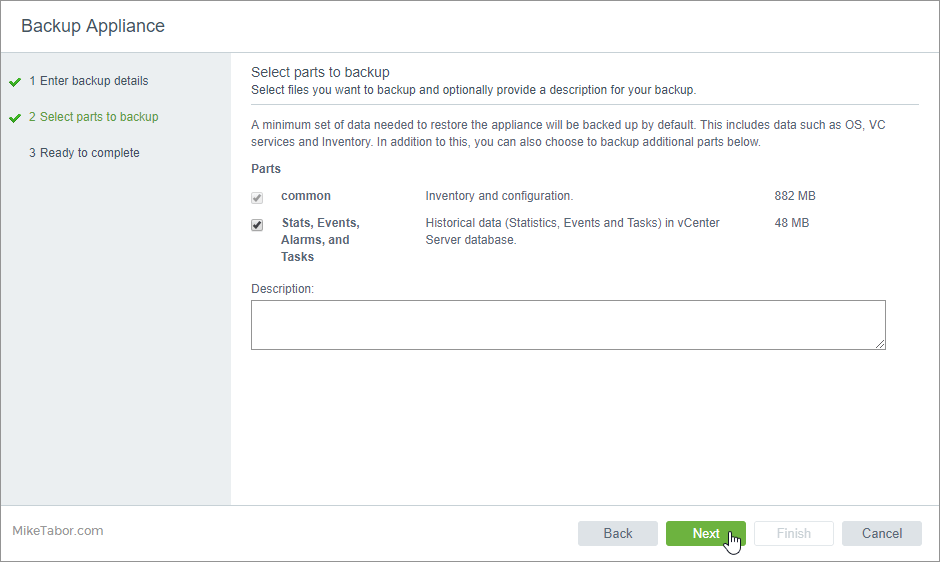
    VCSA backup select parts

How to restore a VMware VCSA 6.5 backup

Restoring from backup is just as easy!

  1. Launch the VMware VCSA 6.5 installer and select “Restore“.
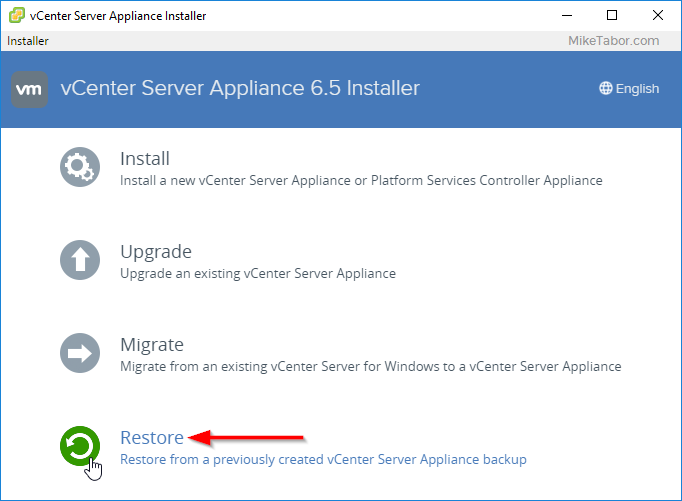
    VCSA restore from backup
  2. Click next through the introduction, accept the EULA and enter your backup details.
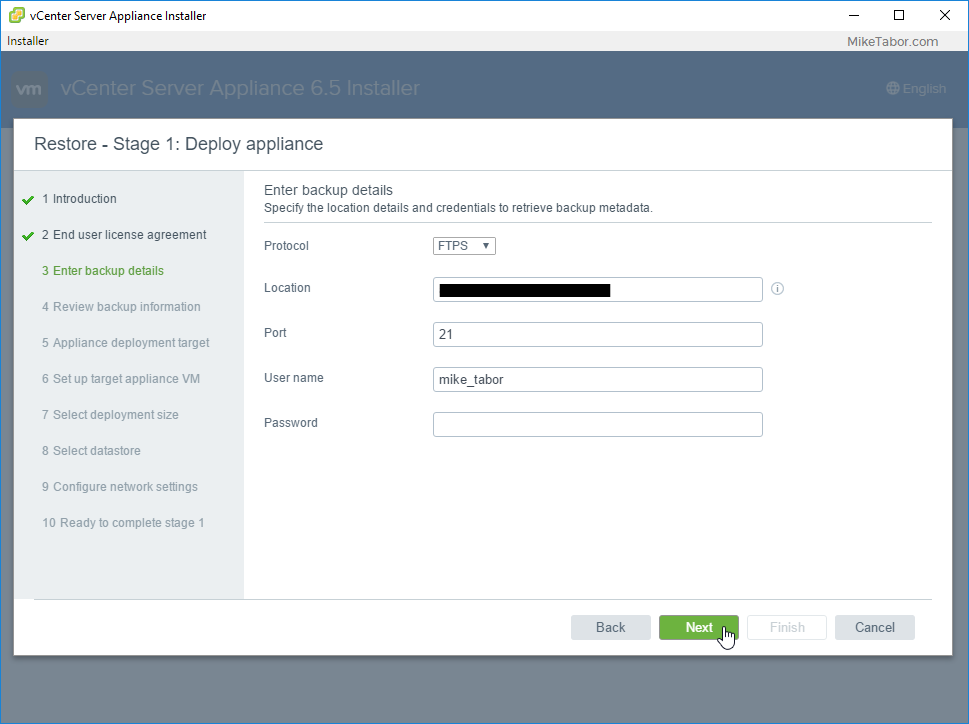
    VCSA restore backup details

From there on it’s pretty straight forward and the wizard will deploy a new VCSA from the backup file.

Similar Posts

  • How to change vCenter Operations Manager session timeout

    I’ve been using vCenter Operations Manager for a while now at work for all the great information that can be found about our environment so I tend to log into vCOp at the start of the morning and then come back to as I may or may not need it thoughout the day. One thing that has kind of annoyed me is having to constantly log into the standard UI multiple times a day due to the default 30 minute timeout value.

    Luckily, with a bit of SSH and a few commands we can increase this timeout to anything we like or even disable it all together!

    Read More “How to change vCenter Operations Manager session timeout”

  • How to shadow a VMware Horizon View desktop

    Ever work on a View 5.x Desktop issue and needed access to the desktop it self while in use? While not a feature that is easily enabled say via the vmTools or the View Administrator console – it can however be easily enabled via Group Policy, similar to some other settings that I mention in the Windows 7 Optimization Guide.

    Enable PCoIP Shadowing

    • Import the pcoip.adm GPO Template.
    • Navigate to: Computer Configuration > Administrative Templates > Classic Administrative Templates (ADM) > PCoIP Session Variables.
    • Enable “Enable access to PCoIP session from a vSphere console”.
    • Link the GPO to the OU where your View Desktops reside.

    shadow pcoip policy

    Read More “How to shadow a VMware Horizon View desktop”

  • VMware vCenter 5.0 Update 1a released

    VMware vCenter 5.0 Update 1a has just been released and is the first major update since version 5.0.

    The main improvements being:

    • vCenter Server 5.0 Update 1a introduces support for the following vCenter Databases
      • Oracle 11g Enterprise Edition, Standard Edition, Standard ONE Edition Release 2 [11.2.0.3] – 64 bit
      • Oracle 11g Enterprise Edition, Standard Edition, Standard ONE Edition Release 2 [11.2.0.3] – 32 bit
    • vCenter Server Appliance Database Support: The DB2 express embedded database provided with the vCenter Server Appliance has been replaced with VMware vPostgres database. This decreases the appliance footprint and reduces the time to deploy vCenter Server further.

    Read More “VMware vCenter 5.0 Update 1a released”

  • VCP5 Exam: Passed

    Pass

    This morning I took the VCP510 exam and passed it on my first go at it!

    Overall I felt the exam was a nice challenge, while I can’t go into details of the exam, per the NDA. I will say I was surprised at the number of multiple answer questions and the VPC510 was certainly more “real-world” based and not so much memorizing config maximums.

    That said, I’ll do as others have done and list what I used in my preparation for the VCP510 exam…

    Read More “VCP5 Exam: Passed”

  • VMware View client now availabe for Android!

    VMware has announced that they have released a View Client for Android tablets available on the Android Market now. Here are just a few of the features found on the new client.

    • A new look and feel – The View Client for Android features the NEW blue look and feel of the VMware View clients!
    • Multiple broker support – If you have more than one VMware View broker in your organization, you can can easily access your desktop from all of them via the Android client
    • Desktop Shortcuts – Quickly connect with as many as four recent desktop via shortcuts
    • Virtual trackpad – Control your desktop on a granular level just like you would control the mouse on a laptop
    • Custom keyboard toolbar – Super easy access to all of the special keys not found on the Android default keynboard
    • Honeycomb 3.x support – Made from the ground up for the new generation of Android tablets
    • Custom gestures – Invoke keyboard, scrolling, etc are as easy as ever and simple to use
    • VMware View Security Server support (best experience) – No need to have VPN when you use VMware View Security Server
    • Background tasking – Switch between apps on your tablet and come right back
  • How to update VMware ESXi 6.7 to 6.7 Update 1

    To go along with the newly released VMware vCenter 6.7 Update 1 release, comes VMware ESXi 6.7 Update 1 as well.

    As you might expect with an Update 1 release there are a number of patches, fixes and new additions with ESXi 6.7 U1. If you haven’t already seen, check out the release notes here.

    Below are two ways to easily upgrade your ESXi 6.0-6.7 hosts to ESXi 6.7 U1 using the command line or by using VMware Update Manager.
    Read More “How to update VMware ESXi 6.7 to 6.7 Update 1”