Easy ESXi 5.5 upgrade via command line

ESXi 5.5 was just released general availability (GA) on Sunday (9/22) and I’m itching to upgrade the home lab to run the latest version with all it’s goodies. I wanted to try upgrading my hosts without having to go through the same process that I followed setting up ESXi on the NUC in the first place, injecting custom NIC drivers, etc.

Enter the command line…

  1. Move all VM’s from the host and then put the host into Maintenance Mode.
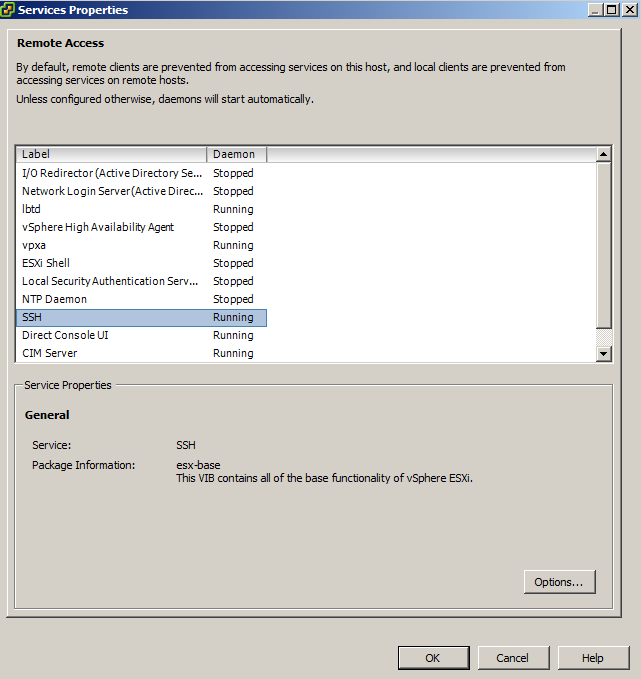
  2. Go to the Configuration tab > Security Profile and Enable SSH under Services.
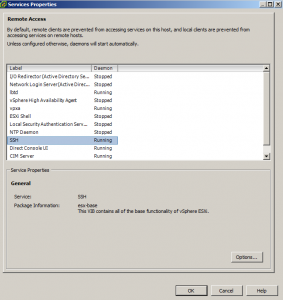
    ssh enabled
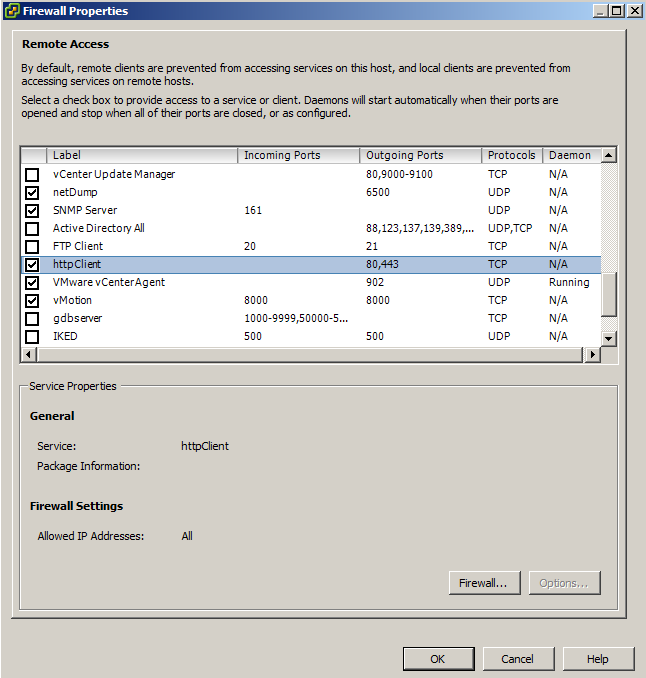
  3. Under Firewall, enable httpClient (outbound http).
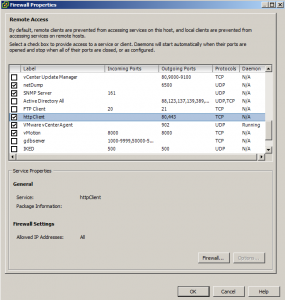
    httpClient enable
  4. Open PuTTY (or other SSH client) and SSH into your host.
  5. Type the following command to download and install the update:
    esxcli software profile update -d https://hostupdate.vmware.com/software/VUM/PRODUCTION/main/vmw-depot-index.xml -p ESXi-5.5.0-1331820-standard
  6. Depending on your internet connection, this could take just a few minutes or longer. Once finished you should see the following:

    esxi update complete
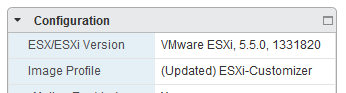
  7. Reboot your host then verify ESXi 5.5 is installed:

    esxi 5.5
  8. note: I did have to restart the virtualcenter service in order for the Web Client to show the updated version number.
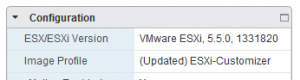
    web client esxi 5.5

That’s it, it’s as simple as that! Because I ran the UPDATE command and not the INSTALL command, my existing injected NIC drivers for the Intel NUC remained in place. So a quick and easy upgrade for hosts with no CD-ROM or ability to virtually mount a CD image.

UPDATE:

View available upgrades

The steps above work perfectly for when you want to upgrade to ESXi 5.5, but what about when newer versions come out or you want to apply a different update? Simply run this command to view all available image profiles in the depot:

esxcli software sources profile list -d https://hostupdate.vmware.com/software/VUM/PRODUCTION/main/vmw-depot-index.xml

get image profiles

Then replace the file name in the command from Step 5 with the new/other image profile of your choice.


Similar Posts

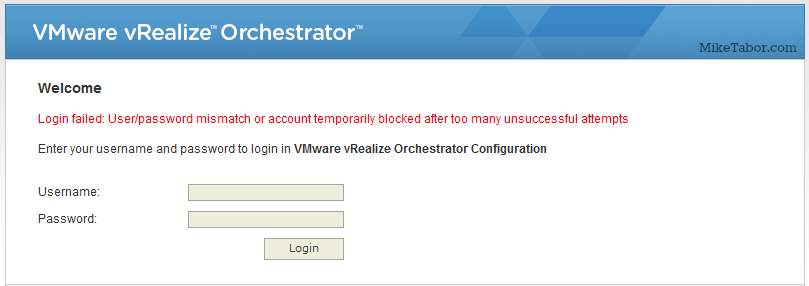
  • How to unlock vRealize Orchestrator default account

    vrealize orchestrator account locked out

    Earlier this month I posted how on how to fix the weak ephemeral Diffie-Hellman key issue in VMware vRealize Orchestrator 6.0.2 appliance. Another issue I’ve ran into is how to unlock vRealize Orchestrator default account. It seems you can lock the account after to many failed attempts but once locked the account does not seem to unlock… or at least for me after waiting more than a couple hours.

    Luckily unlocking the vRealize Orchestrator default account is pretty straight forward.

    Read More “How to unlock vRealize Orchestrator default account”

  • Upgrade Synology DS1819+ RAM to 32GB

    Recently got my hands on a Synology DS1819+ which offers a number of great features, one of which is the ability to support 32GB memory! Giving me more than plenty of resources for all kinds of Docker containers, virtual machines, and Synology applications.

    In this quick guide I’ll detail how to upgrade your Synology DS1819+ to 32GB of RAM.

    Items needed:

    Read More “Upgrade Synology DS1819+ RAM to 32GB”

  • Thank you VMware Community!

    VMware vExpert 2014

    So far, 2014 has been a very rewarding year for a number of reasons, two of which has happened in just a week or two span. First, Eric Siebert (@ericsiebert) announced on March 27th, this years results of the 2014 Top VMware & Virtualization Blog voting. My first year entered into voting and made it to 71st place! A huge thanks goes out to not only Eric but just as much so to everyone who voted for me!

    To top it off, yesterday VMware announced 2014’s first quarter VMware vExpert list. While vExpert isn’t a technical certification or even a general measure of VMware expertise. The VMware judges selected people who were engaged with their community and who had developed a substantial personal platform of influence in those communities. There were a lot of very smart, very accomplished people, even VCDXs, that weren’t named as vExpert this year. VMware awarded this title to 754 people this year and on that list of many impressive names you’ll find yours truly, Michael Tabor!

    I’m both honored and humbled by both lists. It’s a great feeling to be recognized by not only my peers through the voting in the Top vBlog but also by VMware themselves through the vExpert title.

    So again THANK YOU very much to the entire VMware community, a spectacular community indeed, and congratulations to everyone else that made the Top vBlog and vExpert lists!

  • Edit Virtual Hardware 10 VM’s with vSphere 5.5 U2 client

    When ESXi 5.5 came out so did a new virtual hardware version, 10, as well. However the ability to edit virtual machines have have been upgraded to virtual hardware 10 was restricted to only the vSphere web client. In some cases people have put off upgrading to virtual hardware 10 either for dislike of the web client or knowing you cannot edit the VM in the event of the web client being down.

    That all changes today, VMware has just released vCenter 5.5 Update 2 today and one of the “resolved issues” in today’s release notes is the ability to now edit virtual machines with Virtual Hardware 10 using the vSphere thick (C#) client.

    edit virtual hardware 10

    Read More “Edit Virtual Hardware 10 VM’s with vSphere 5.5 U2 client”

  • VMUG EVALExperience, the new VMware VMTN

    VMUG EVALExperience

    Long ago VMware offered a program called VMware Technology Network (VMTN) which was very similar to Microsoft’s TechNet, which allowed you to download and run various VMware software within your home lab for a small yearly fee. Just like the Microsoft TechNet, the VMware VMTN program was eventually closed. From the time the VMTN program closed many people have begged and pleaded with VMware to bring the program back, there is even a long forum thread asking VMware to bring VMTN back. Though it never did… until now.

    Read More “VMUG EVALExperience, the new VMware VMTN”

  • VMware View client now availabe for Android!

    VMware has announced that they have released a View Client for Android tablets available on the Android Market now. Here are just a few of the features found on the new client.

    • A new look and feel – The View Client for Android features the NEW blue look and feel of the VMware View clients!
    • Multiple broker support – If you have more than one VMware View broker in your organization, you can can easily access your desktop from all of them via the Android client
    • Desktop Shortcuts – Quickly connect with as many as four recent desktop via shortcuts
    • Virtual trackpad – Control your desktop on a granular level just like you would control the mouse on a laptop
    • Custom keyboard toolbar – Super easy access to all of the special keys not found on the Android default keynboard
    • Honeycomb 3.x support – Made from the ground up for the new generation of Android tablets
    • Custom gestures – Invoke keyboard, scrolling, etc are as easy as ever and simple to use
    • VMware View Security Server support (best experience) – No need to have VPN when you use VMware View Security Server
    • Background tasking – Switch between apps on your tablet and come right back

Leave a Reply

Your email address will not be published. Required fields are marked *

17 Comments

  1. Thank You. This took care of my issue of not being able to inject NIC drivers to 5.5 and only could on 5.1, this upgraded my NUC server and all is well.

  2. Is it strictly necessary to move all the VMs off the host, or is shutting them down and putting it in Maintenance mode sufficient?

    1. No it is not required that you move the VM’s off the host before upgrading them. I prefer to move all VM’s off in case something was to go wrong and so that I don’t have to power down the machines.

      Powering off the VM’s and putting the host into maintenance mode will work just fine.

      1. Okay; good. We’re SAN-less right now (have one sitting on the floor in my office waiting to be racked-and-stacked), so moving the VMs off the hosts is non-trivial. Much less work to just power them off and put the host into maintenance mode.

      1. Okay; and the argument to the -p flag (ESXi-5.5.0-1331820-standard) came from what source? I’m guessing it’ll always just be the current version + build #?

      2. Yeah, I guess I wasn’t asking so much about what the “-p” means (I could figure that), but rather, how you arrived at the “5.5.0-1331820-standard” – in other words, when ESXi 5.6 comes out (or whatever the next version will be called) and I want to replicate this, where would I need to go to determine what exact version number/build number to use in the command? It looks like I can just go to the MyVMWare site and snag the version + build number – just wasn’t sure if that was your process as well, or if there was a better way of arriving at it.

      3. The way I do it is by doing the same steps above (enable SSH and httpclient) and then run this command:

        esxcli software sources profile list -d https://hostupdate.vmware.com/software/VUM/PRODUCTION/main/vmw-depot-index.xml

        This will then display a list of all available images at depot. So when the new version of ESXi comes out you’d type the above, find the new name and then replace that name with the name I’ve supplied in the post.