How to Reset VMware vCenter Server Appliance Root Password

Have you ever forgotten the root password on your VMware vCenter Server Appliance (VCSA) or let the password expire before changing it?

This is exactly what happened to me in one of my lab environments and in this post I’ll show how to quickly and easily reset the VCSA root password.

How to reset the vCenter Service Applicate Root password

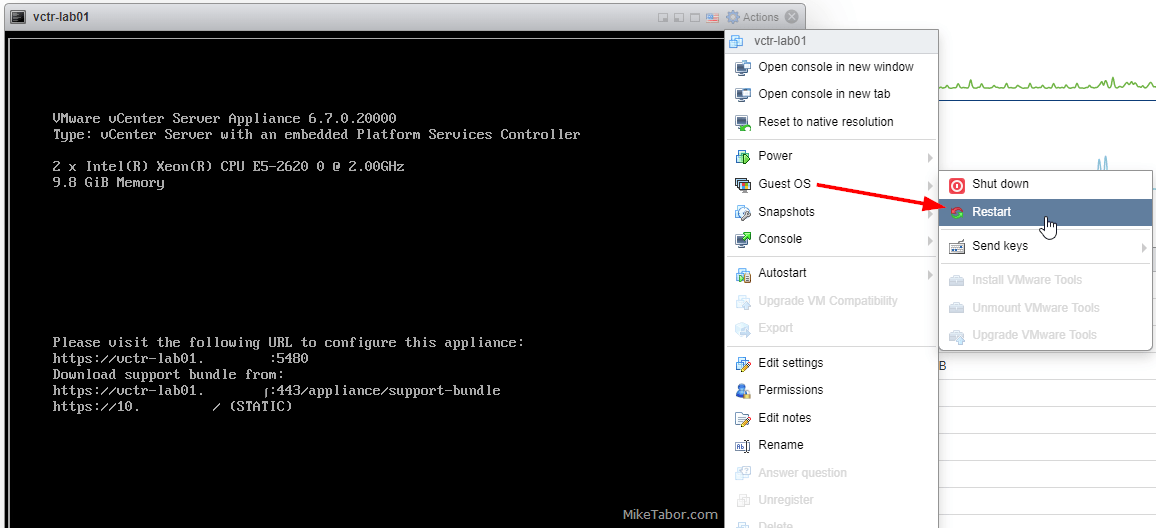
    1. Connect to the host that the VMware VCSA is running on (https:\\HOST_IP_ADDRESS\ui) and open a console window.
    2. Reboot the VMware VCSA.
      VMware vCenter Service Applicante reboot
    3. As soon as the Photon splash screen appears, press e on your keyboard.
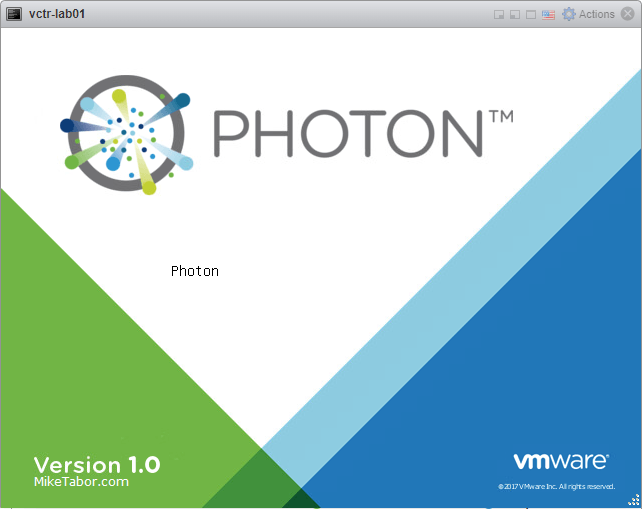
      Photon splash screen
    4. Add rw init=/bin/bash to the end of the first line.
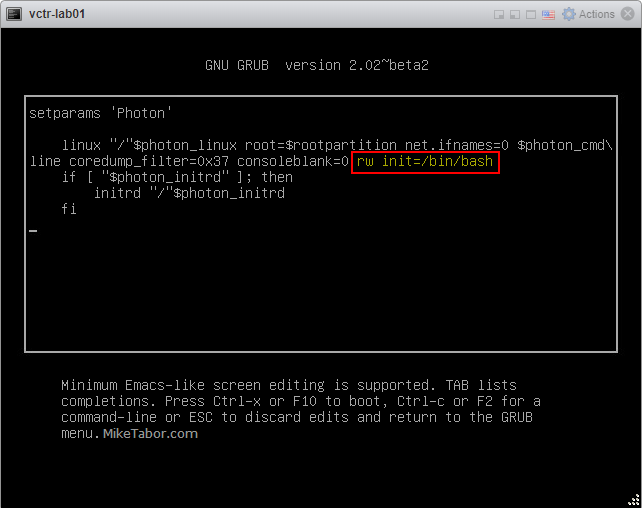
      vcenter vcsa bin bash
    5. Press F10 to continue loading the Photon OS.
    6. At the command prompt, type passwd and press Enter. Then enter and confirm your new password.
    7. After confirming your new password type: umount / to unmount the root filesystem.
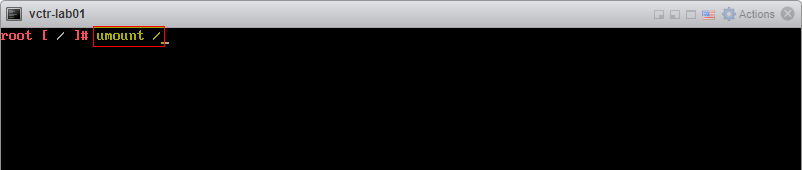
      vcenter vcsa umount
    8. Finally, reboot the VMware VCSA by typing: reboot -f

      vcenter vcsa reboot

After the VMware vCenter Server Appliance finishes loading, you should be able to login using the new root password you’ve set above.
Similar Posts

  • VMUG EVALExperience, the new VMware VMTN

    VMUG EVALExperience

    Long ago VMware offered a program called VMware Technology Network (VMTN) which was very similar to Microsoft’s TechNet, which allowed you to download and run various VMware software within your home lab for a small yearly fee. Just like the Microsoft TechNet, the VMware VMTN program was eventually closed. From the time the VMTN program closed many people have begged and pleaded with VMware to bring the program back, there is even a long forum thread asking VMware to bring VMTN back. Though it never did… until now.

    Read More “VMUG EVALExperience, the new VMware VMTN”

  • VMware View client now availabe for Android!

    VMware has announced that they have released a View Client for Android tablets available on the Android Market now. Here are just a few of the features found on the new client.

    • A new look and feel – The View Client for Android features the NEW blue look and feel of the VMware View clients!
    • Multiple broker support – If you have more than one VMware View broker in your organization, you can can easily access your desktop from all of them via the Android client
    • Desktop Shortcuts – Quickly connect with as many as four recent desktop via shortcuts
    • Virtual trackpad – Control your desktop on a granular level just like you would control the mouse on a laptop
    • Custom keyboard toolbar – Super easy access to all of the special keys not found on the Android default keynboard
    • Honeycomb 3.x support – Made from the ground up for the new generation of Android tablets
    • Custom gestures – Invoke keyboard, scrolling, etc are as easy as ever and simple to use
    • VMware View Security Server support (best experience) – No need to have VPN when you use VMware View Security Server
    • Background tasking – Switch between apps on your tablet and come right back
  • VMware Update Manager U3e upgrade failing? Un-install it!

    VMware Update Manager U3e error

    I was recently upgrading a VMware environment from vCenter Server Update 3b to Update 3e and during the scheduled change I had also planned on upgrading VMware Update Manager to Update 3e and ran into the following error:

    VMware Workstation unrecoverable error: (vthread-3)
    GetProcAddress: Failed to resolve ENGINE)load_aesni: 127
    You can request support.

    Looking for a possible solution at the VMware Knowledge Base came back with no results and to error message wasn’t overly useful either with “VMware Workstation unrecoverable error: (vthread-3)” as Workstation wasn’t installed on this server.

    Read More “VMware Update Manager U3e upgrade failing? Un-install it!”

  • VMware vCenter 5.0 Update 1a released

    VMware vCenter 5.0 Update 1a has just been released and is the first major update since version 5.0.

    The main improvements being:

    • vCenter Server 5.0 Update 1a introduces support for the following vCenter Databases
      • Oracle 11g Enterprise Edition, Standard Edition, Standard ONE Edition Release 2 [11.2.0.3] – 64 bit
      • Oracle 11g Enterprise Edition, Standard Edition, Standard ONE Edition Release 2 [11.2.0.3] – 32 bit
    • vCenter Server Appliance Database Support: The DB2 express embedded database provided with the vCenter Server Appliance has been replaced with VMware vPostgres database. This decreases the appliance footprint and reduces the time to deploy vCenter Server further.

    Read More “VMware vCenter 5.0 Update 1a released”

  • vSphere 5.5 Update 1 has been released, includes VSAN.

    VMware vSphere 5.5 update 1

    VMware has officially released vSphere 5.5 U1 which includes a number of improvements, fixes, and most excitedly the production ready version of VSAN!

    What’s new

    • vCloud Hybrid Service vSphere Client Plug-in, is now available in vSphere Web Client.
    • vCenter Server is now supported on Windows Server 2012 R2.
    • A number of resolved issues

    Read More “vSphere 5.5 Update 1 has been released, includes VSAN.”

  • Easy ESXi 6.0 upgrade via command line

    VMware has released ESXi 6.0 back in March and I recently posted a guide on how to upgrade your vCenter Server Appliance from 5.x to 6.0 – Now we’re going to look at two ways to upgrade a VMware ESXi 5.x host to ESXi 6.0 via command line.

    The first method will show you how to have each ESXi host download the update directly from VMware and then upgrade itself while the second method shows how to download the update, place it on a datastore accessible to the host, then upgrade the host.

    Read More “Easy ESXi 6.0 upgrade via command line”

Leave a Reply

Your email address will not be published. Required fields are marked *