How to upgrade vCenter Server Appliance from 5.x to 6.0

VMware vSphere 6.0 has finally been released as GA on March 12th and with it out of beta I hope to post several “how-to” posts, this being the first on how to upgrade your vCenter Server Appliance from 5.1/5.5 to vCSA 6.0. So lets get started…

Prerequisites:

  • vCSA 6.0 ISO downloaded and mounted or burned to disc.
  • Installed Client Integration Plugin (located in the vcsa folder on the ISO).

Upgrading vCSA 5.x to 6.0

In a nutshell the upgrade process will install a new vCSA using a temporary network and on a host of your choice. Once installed the new vCSA will then import all the data from the existing vCSA as well as it’s network settings over to the new 6.0 vCSA.

  1. Double click on the vcsa-setup.html file and select “Upgrade“.
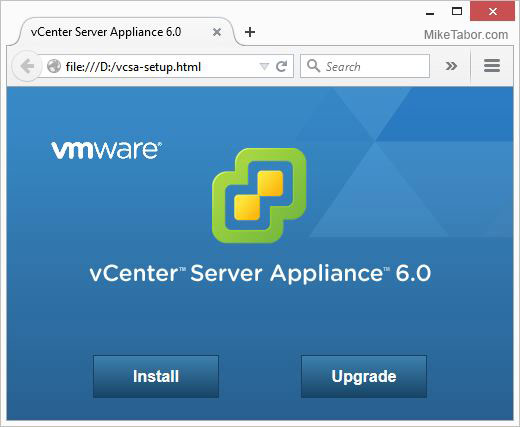
    vCenter Server Appliance 6.0 upgrade
  2. After agreeing to the User License Agreement you are then prompted to enter the FQDN or IP address and credentials of the ESXi host you wish to deploy the vCenter Server Appliance to.
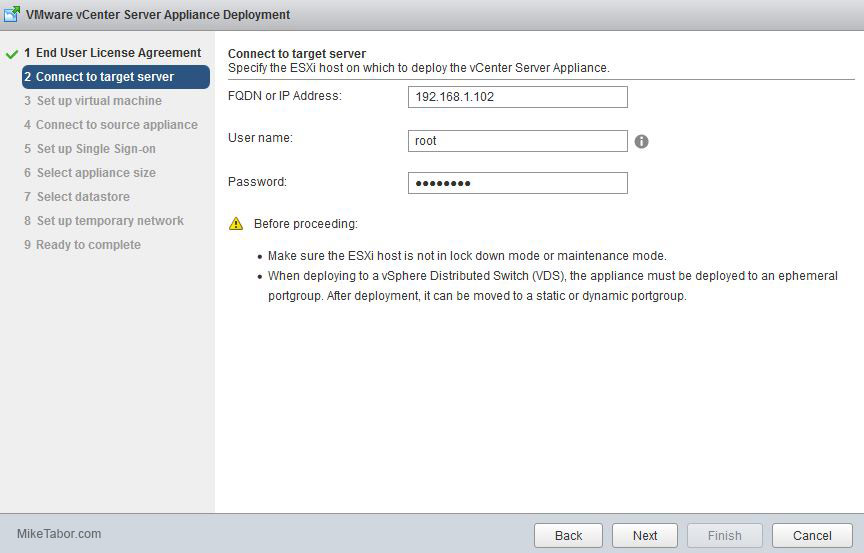
    vCenter Server Appliance 6.0 connect target
  3. Now give the new appliance a name, you can also choose to enable SSH if you wish.
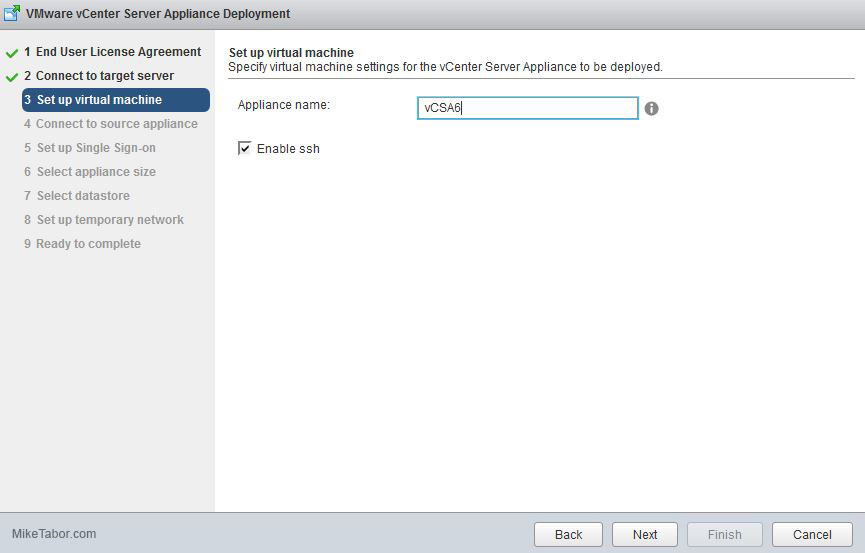
    vCenter Server Appliance 6.0 vm
  4. Next you need to select from the drop down menu what version of vCSA you are upgrading from then enter the IP or FQDN of the existing vCSA credentials as well as the host the old vCSA is currently located on.
    Note: Since this is just a lab I choose not to migrate performance and historical data, this will also speed up the upgrade.
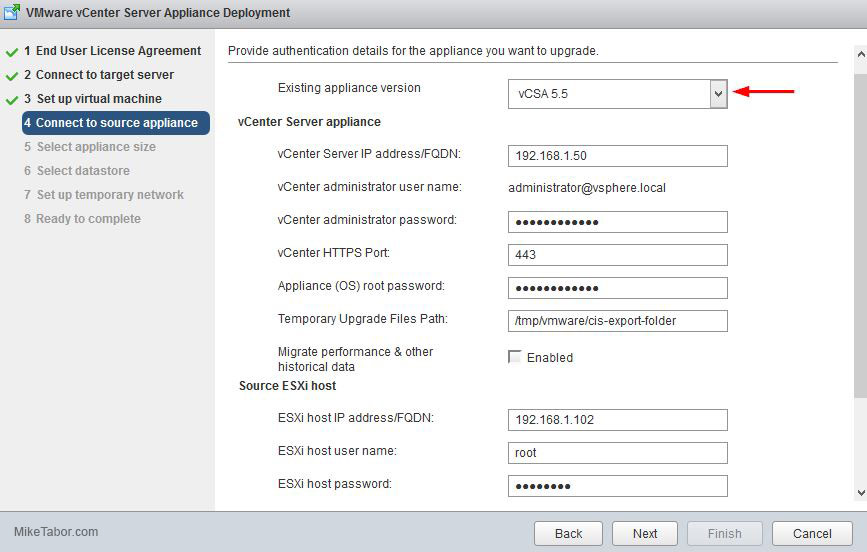
    vCenter Server Appliance 6.0 source appliance
  5. Select the size of your appliance that fits your environment, Tiny with 100 VM’s up to Large with 10,000 VM’s.
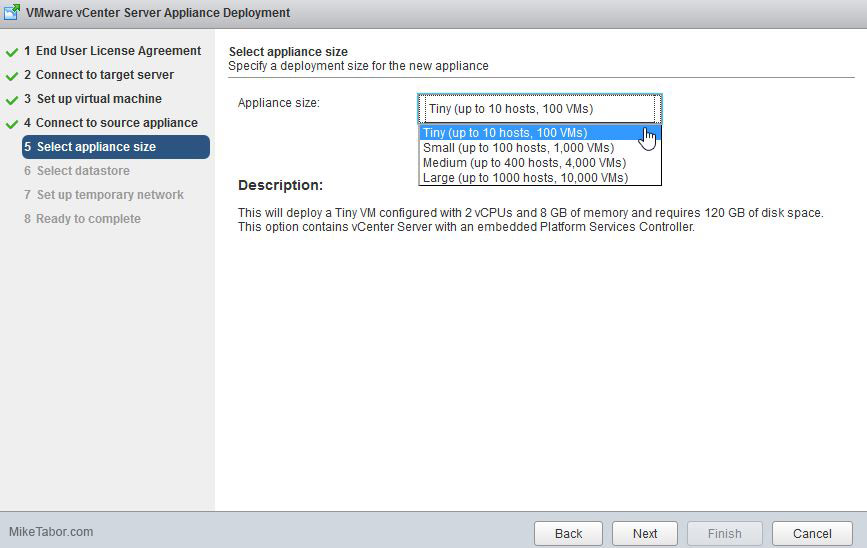
    vCenter Server Appliance 6.0 appliance deployment
  6. Next select the datastore you want the new appliance to be installed on.
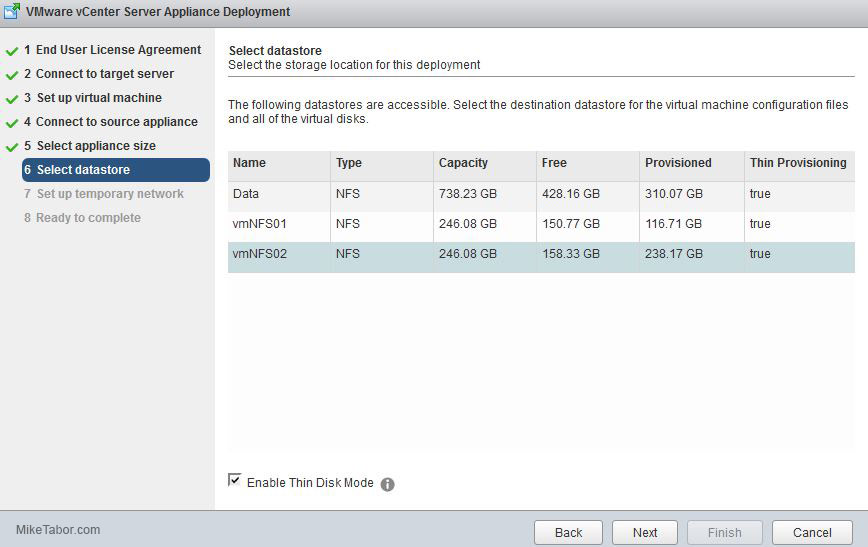
    vCenter Server Appliance 6.0 datastore
  7. Now we just need to enter the temporary network information, obviously ensuring this temporary IP is not already in use somewhere.
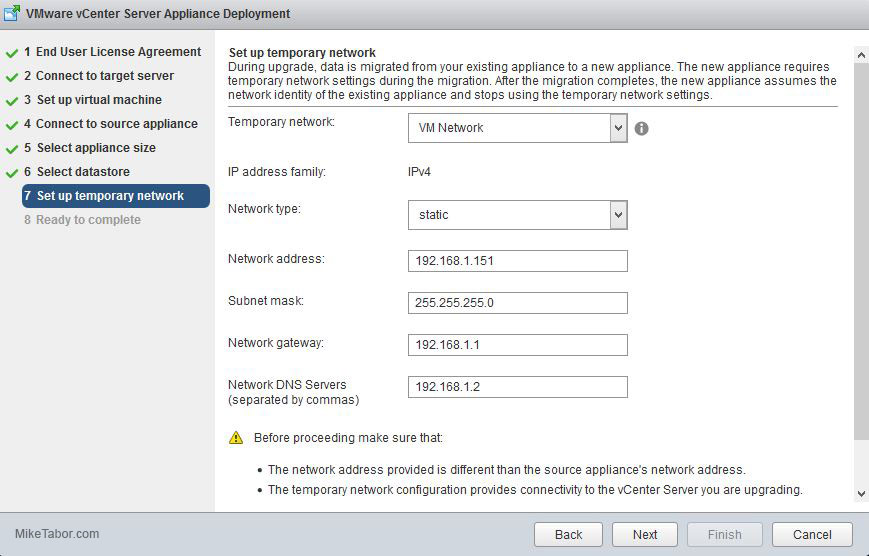
    vCenter Server Appliance 6.0 temp network
  8. The final step is to confirm all the settings and click on “Finish“.

The process worked very nicely and only took just a few minutes for me to complete in my home lab.

Similar Posts

  • VMware View client now availabe for Android!

    VMware has announced that they have released a View Client for Android tablets available on the Android Market now. Here are just a few of the features found on the new client.

    • A new look and feel – The View Client for Android features the NEW blue look and feel of the VMware View clients!
    • Multiple broker support – If you have more than one VMware View broker in your organization, you can can easily access your desktop from all of them via the Android client
    • Desktop Shortcuts – Quickly connect with as many as four recent desktop via shortcuts
    • Virtual trackpad – Control your desktop on a granular level just like you would control the mouse on a laptop
    • Custom keyboard toolbar – Super easy access to all of the special keys not found on the Android default keynboard
    • Honeycomb 3.x support – Made from the ground up for the new generation of Android tablets
    • Custom gestures – Invoke keyboard, scrolling, etc are as easy as ever and simple to use
    • VMware View Security Server support (best experience) – No need to have VPN when you use VMware View Security Server
    • Background tasking – Switch between apps on your tablet and come right back
  • My VMware View Windows 7 Optimization Guide

    These are the few steps I do when creating a new "Golden" image. Luckily I don’t have to do these steps all the time as I’ll create the "Golden" image when there is a new upgrade such as when we went from View 4.6 to View 5.0.1. I like to have a new fresh machine using new virtual hardware from the start. You could certainly just upgrade the virtual hardware on the "Golden" image, I just prefer to start clean.

    At any rate, here’s my list. Hopefully someone might find it somewhat useful and maybe even others can improve upon it.

    Preparing a new virtual machine

    1. Create New Virtual Machine – FILE > NEW > VIRTUAL MACHINE (CTRL+N)
    2. Under Configuration select CUSTOM.
    3. Select a Name, Folder, Host, Cluster, and Storage.
    4. Under Guest Operating System select Windows and then Windows 7 32bit under the Version drop down.
    5. Select which Network (VLAN) and under Adapter select VMXNET 3.
    6. Configure disk size to 30GB THIN provisioned.

    Read More “My VMware View Windows 7 Optimization Guide”

  • VMware vSphere 5.5 Update 2 released

    vsphere 5.5 update2 released

    VMware vCenter Server and ESXi 5.5 Update 2 has just been released today with a number of fixes and additional features such as vCenter Server database support for Oracle 12c, Microsoft SQL Server 2012 Service Pack 1, and Microsoft SQL Server 2014 in vCenter Server and support for ESXi hosts with 6TB of RAM in the ESXi 5.5 update 2 release!

    Read More “VMware vSphere 5.5 Update 2 released”

  • VMUG EVALExperience, the new VMware VMTN

    VMUG EVALExperience

    Long ago VMware offered a program called VMware Technology Network (VMTN) which was very similar to Microsoft’s TechNet, which allowed you to download and run various VMware software within your home lab for a small yearly fee. Just like the Microsoft TechNet, the VMware VMTN program was eventually closed. From the time the VMTN program closed many people have begged and pleaded with VMware to bring the program back, there is even a long forum thread asking VMware to bring VMTN back. Though it never did… until now.

    Read More “VMUG EVALExperience, the new VMware VMTN”

  • Fix VMware VCSA /storage/log filesystem out of disk space

    This morning I ran into an issue where users were reporting the production VCSA 6.0 was not allowing them to connect into the web or thick client. Another administrator rebooted the VCSA which seemed to work only briefly. I then logged into the VCSA web management (https://<VCENTER_IP>:5480) and noticed the following health status right away:

    The /storage/log filesystem is out of disk space or inodes

    vcsa /storage/log full

    Read More “Fix VMware VCSA /storage/log filesystem out of disk space”

  • Easy ESXi 6.0 upgrade via command line

    VMware has released ESXi 6.0 back in March and I recently posted a guide on how to upgrade your vCenter Server Appliance from 5.x to 6.0 – Now we’re going to look at two ways to upgrade a VMware ESXi 5.x host to ESXi 6.0 via command line.

    The first method will show you how to have each ESXi host download the update directly from VMware and then upgrade itself while the second method shows how to download the update, place it on a datastore accessible to the host, then upgrade the host.

    Read More “Easy ESXi 6.0 upgrade via command line”

Leave a Reply

Your email address will not be published. Required fields are marked *