Installing Windows 10 on VMware Workstation 10
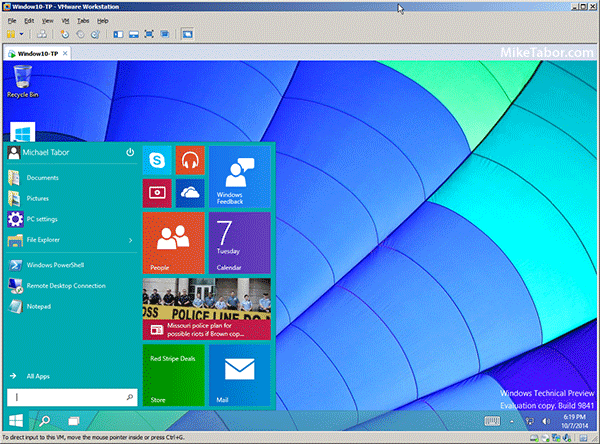
windows 10 on vmware workstation 10

VMware just announced VMware Workstation 11, which includes support for Windows 10 Tech Preview along with several other latest version operating systems, but you don’t have to wait until December when Workstation 11 is released. You can install Windows 10 on VMware Workstation 10 now!

Installation is simple and everything seems to function just fine, VMware tools installs too.

Windows 10 Tech Preview on VMware Workstation 10

You will need to download the Windows 10 Tech Preview ISO, I downloaded the 64-bit version (3.81GB). The rest is done in VMware Workstation…

  1. Go to File > New Virtual Machine (or press CTRL+N) and in the “New Virtual Machine Wizard” select Custom and click on Next.
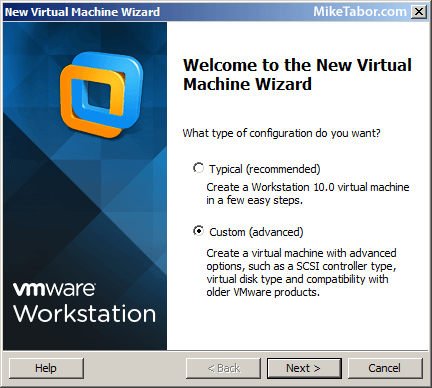
    workstation new machine custom
  2. Ensure the Hardware Compatibility is set to “Workstation 10” and click on Next.
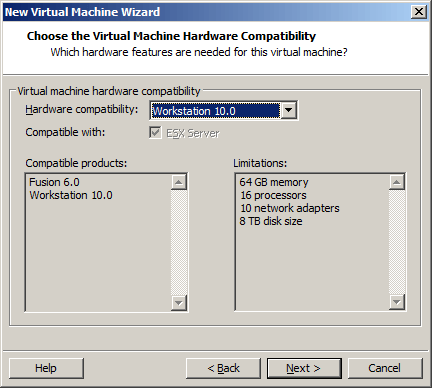
    workstation hardware compatibility
  3. Select “Installer disk image file (iso)” and point it to where you saved the Windows 10 Tech Preview ISO and click Next.
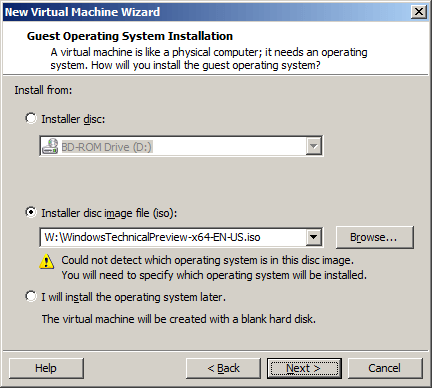
    workstation windows 10 iso
  4. In the next step make sure you select “Microsoft Windows” and in the drop down menu select “Windows 8 x64” and click Next.
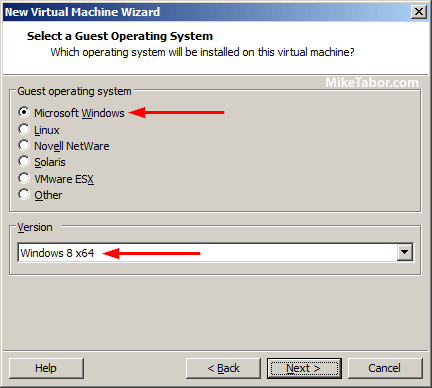
    vmware workstation guest os
  5. From here forward it’s simply just assigning vCPU’s, memory, network, disk size / location, etc as any normal new VM creation process.

After the New Virtual Machine Wizard is complete, just power up the VM and install Windows as your normally would and install VMware Tools once Windows 10 is loaded at the desktop. Installing Windows 10 on VMware Workstation 10 is as easy as that!

So far I’ve not ran into any problems and like what I see in the new Windows 10. If you find any issues please share in the comments below!
Similar Posts

  • How to upgrade vCenter Server Appliance 6.7 to 7.0

    VMware vCenter 7.0 has been released for several months now and figured it was about time I upgraded my home lab to the latest version.

    This post will detail all the steps needed to upgrade vCenter Server Appliance 6.7 to 7.0 without any issues.

    Getting Started

    Before beginning, I HIGHLY recommended you first check the VMware Interoperability Matrix before performing any upgrade to check compatibility of other VMware products.

    Then go download the VCSA 7.0 ISO if you haven’t already and lets get started with the upgrade!

    Read More “How to upgrade vCenter Server Appliance 6.7 to 7.0”

  • HTML5 Embedded Host Client, this looks promising

    It’s no secret many people have really disliked the vSphere web client, it’s very sluggish, clunky, and based on flash (flash comes with it’s own security issues). It was rumored and highly hoped that vSphere 6 might be re-written in HTML5, but sadly this didn’t and hasn’t happened yet. While vSphere 6 did improve a bit on the web client the issues many people have had with it in the past still remain today.

    Enter the VMware HTML5 Embedded Host Client fling. I’ve been using and following this fling for a while now and have really enjoyed it and with each release it keeps getting better and better.

    The Embedded Host Client fling is based on HTML5 which allows it works great across all kinds of platforms, it’s fast, responsive, and doesn’t require any plug-ins – YES the VM console works great. If this happens to be a look of what’s to come in a new VMware vSphere web client, then a client is looking very promising!

    If you haven’t tried it yet, you should. It’s extremely easy to install and doesn’t even require a reboot just follow these simple instructions.

    Read More “HTML5 Embedded Host Client, this looks promising”

  • VMware vCenter Server 5.5.0a update released

    VMware has released an update to vCenter 5.5 Server. The new updated, numbered 5.5.0a doesn’t appear to add any new features but instead focus on squishing a number of bugs in the 5.5 version – mostly around vCenter Single-Sign-On and the vSphere web client.

    Issues resolved with this release are as follows:

    1. Attempts to upgrade vCenter Single Sign-On (SSO) 5.1 Update 1 to version 5.5 might fail with error code 1603
    2. Attempts to log in to the vCenter Server might be unsuccessful after you upgrade from vCenter Server 5.1 to 5.5
    3. Unable to change the vCenter SSO administrator password on Windows in the vSphere Web Client after you upgrade to vCenter Server 5.5 or VCSA 5.5
    4. VPXD service might fail due to MS SQL database deadlock for the issues with VPXD queries that run on VPX_EVENT and VPX_EVENT_ARG tables

    Read More “VMware vCenter Server 5.5.0a update released”

  • Shrink a thin provisioned VMDK disk

    When maintaining a Horizon View environment I like to keep my parent images as small as possible and over time a thin provision disk can start to grow on you if you don’t watch it – be it from downloading installers, updates, or even running disk defrag. While there isn’t a simple, one click button in the View Administrator Console there is a fairly easy manual method using vmfkstools.

    Before we can use “vmkfstools” to shrink the VMDK file we must zero out any unused space on the thin provisioned disk. A simple way of doing this is by using a free utility called SDelete from Sysinternals.

    Read More “Shrink a thin provisioned VMDK disk”

  • How to shadow a VMware Horizon View desktop

    Ever work on a View 5.x Desktop issue and needed access to the desktop it self while in use? While not a feature that is easily enabled say via the vmTools or the View Administrator console – it can however be easily enabled via Group Policy, similar to some other settings that I mention in the Windows 7 Optimization Guide.

    Enable PCoIP Shadowing

    • Import the pcoip.adm GPO Template.
    • Navigate to: Computer Configuration > Administrative Templates > Classic Administrative Templates (ADM) > PCoIP Session Variables.
    • Enable “Enable access to PCoIP session from a vSphere console”.
    • Link the GPO to the OU where your View Desktops reside.

    shadow pcoip policy

    Read More “How to shadow a VMware Horizon View desktop”

  • How to install VisualEsxtop

    If you haven’t already heard, VisualEsxtop is a Fling developed by a few VMware Engineers that provides a java based GUI to the every useful ESXTOP. As an added bonus provides a description of each counter, multiple windows, the ability to sort metrics, and even provide basic graphs. Oh and it’s FREE!

    Setup and install on Windows 7 is pretty easy as well:

    Visual ESXtop

    Read More “How to install VisualEsxtop”

Leave a Reply

Your email address will not be published. Required fields are marked *

One Comment

  1. This no longer works after build 1067 … need Workstation 12.5 or later, otherwise you get stuck in a KMODE_EXCEPTION_NOT_HANDLED loop.