Upgrade ESXi host to ESXi 5.5 using VMware Update Manager 5.5

A while back I wrote about how to upgrade to ESXi 5.5 via command line which works great when you only have a few hosts as each host has to download the ISO from the web each time. This time I’ll show you step by step how to upgrade your ESXi 5.1 host to ESXi 5.5 using VMware Update Manager 5.5 (aka VUM).

For this post I’m going to assume you have already upgraded your vCenter and VUM to versions 5.5 as well as the VUM plugin installed. So lets begin!

Upgrade ESXi host to 5.5 using VMware Update Manager (VUM)

  1. Open the vSphere client and click on Update Manager
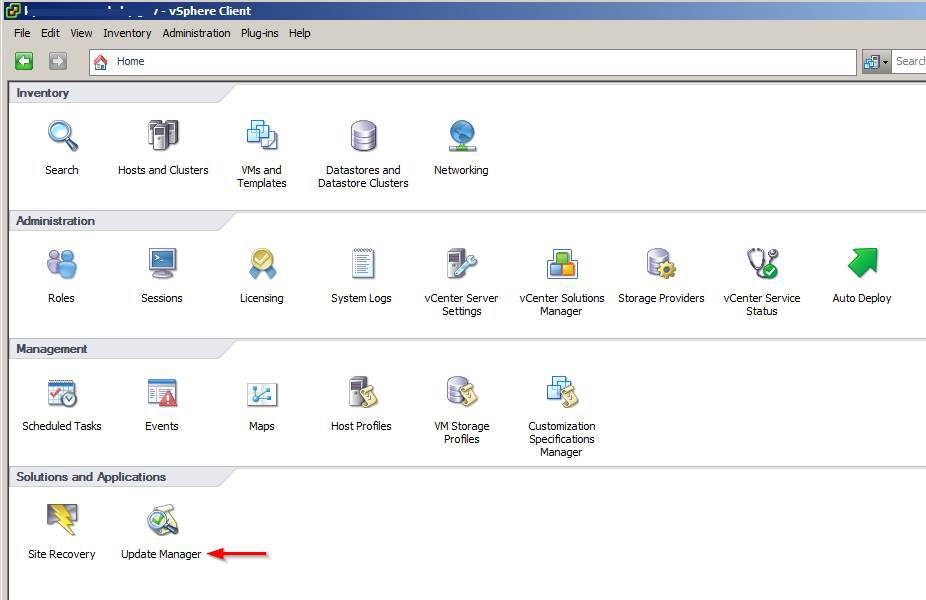
    VMware Update Manager icon

  1. First we’ll upload the ISO image. Click on the “ESXi Images” tab.
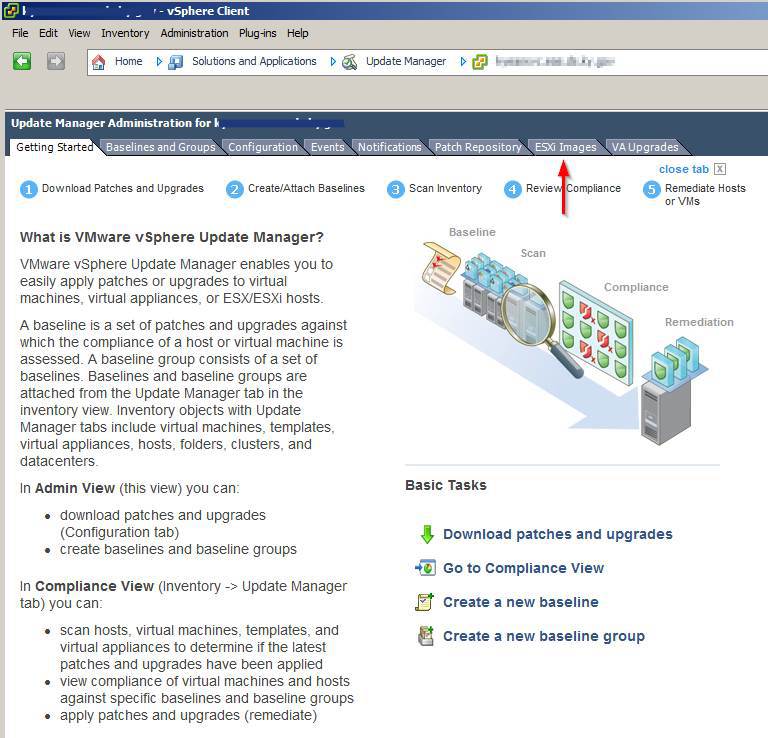
    vum esxi image tab
  2. Click on the “Import ESXi Image” link.
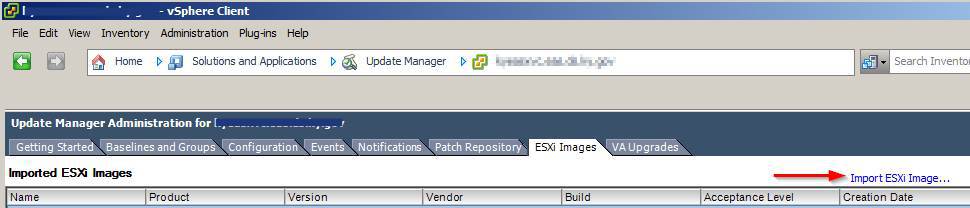
    import-esxi-image
  3. Click on “Browse” and select the path where the ESXi 5.5 ISO image is located on your machine or network, then click “Next“.
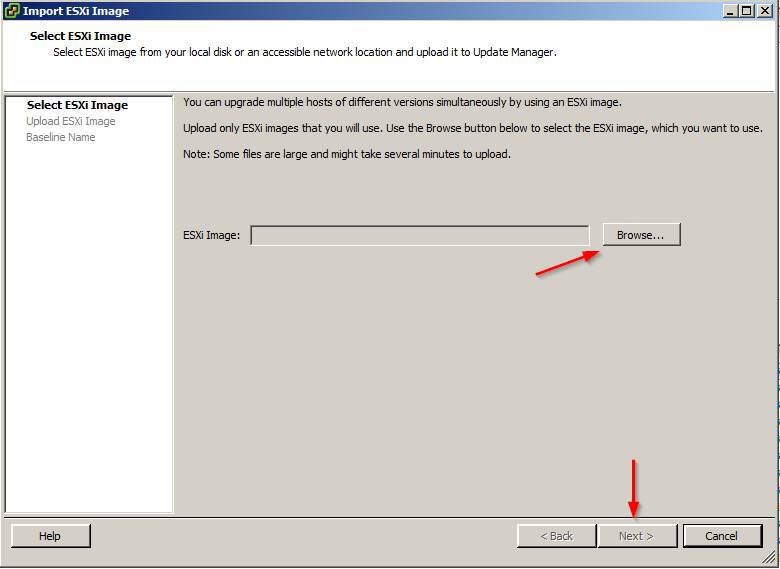
    browse-iso-location
  4. The ISO image will then start the process of upload the image. This typically just takes a minute or two.
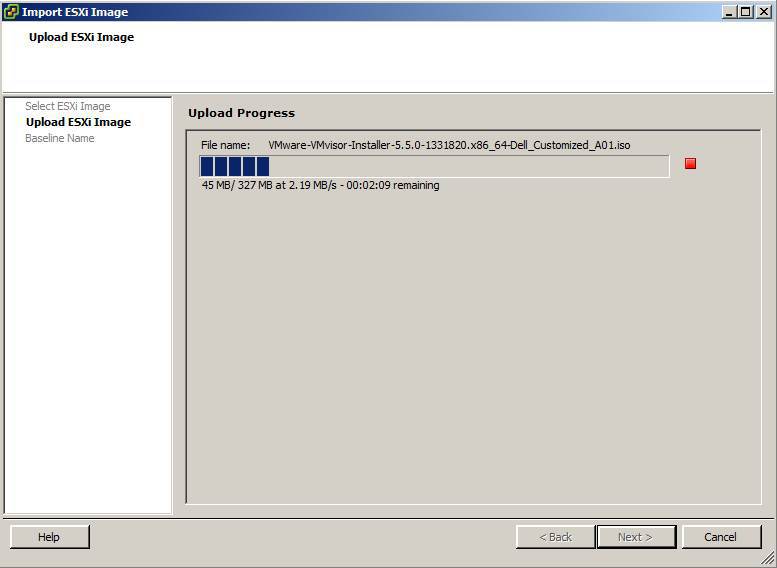
    iso-upload
  5. After the ESXi 5.5 ISO image upload is completed you are prompted to create a baseline. Go ahead and do so as we’ll need a baseline in order to upgrade the hosts anyways. Simply enter a name and description for the Baseline.
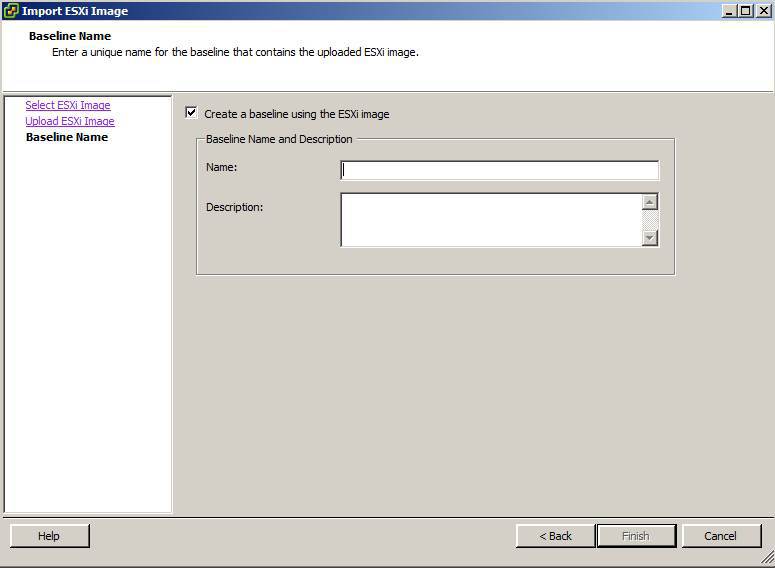
    create-baseline
  6. Go to the Hosts and Clusters view and select the host you want to upgrade first and then select the “Update Manager” tab, then click on the “Attach” link so that we can attach our new Baseline to this host.

    host-update-tab
  7. Now select the newly created Baseline you created during the upgrade, then click on “Attach“. In this example, since this is a Dell host I named the baseline “Dell 5.5 Hosts”.
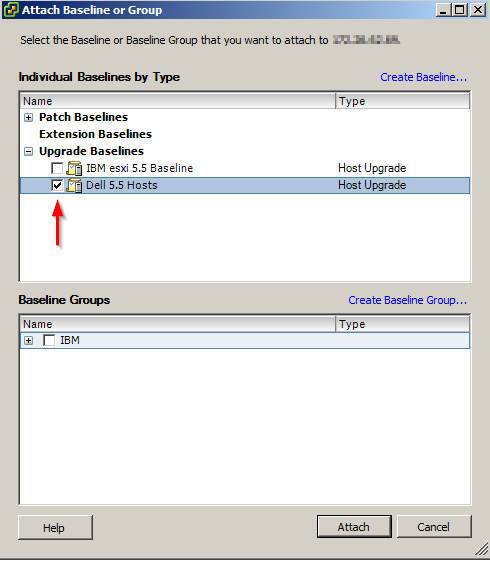
    select-baseline
  8. Once you have attached the baseline now click on “Scan“.
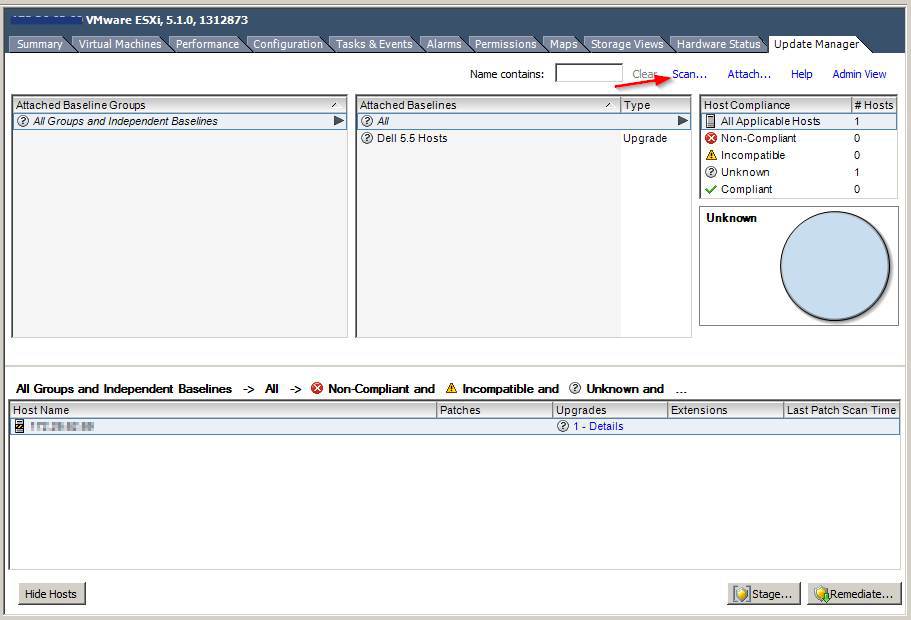
    scan-host
  9. In the scan confirmation window make sure that “Upgrades” are checked and then click on “Scan“. This step can take several minutes.
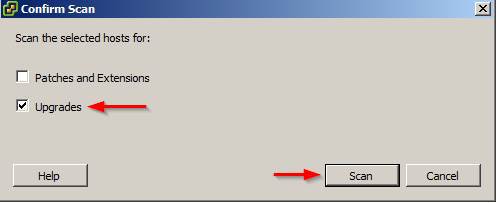
    confirm-scan
  10. When the scan is complete you’ll be shown the results such as below which will tell you the host (ESXi 5.1) is not compliant with the baseline (ESXi 5.5). To remedy this click on “Remediate“.
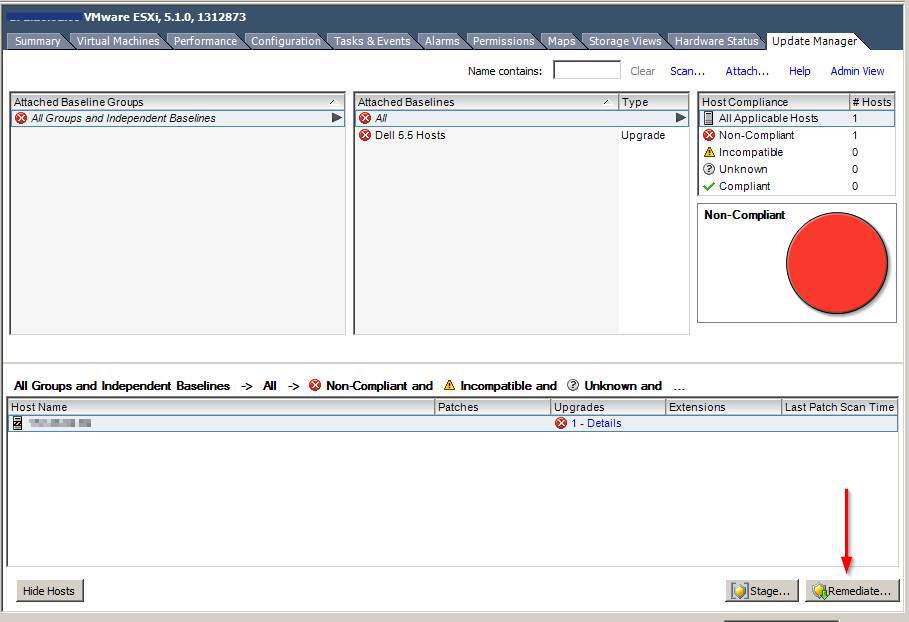
    remediate
  11. Select your baseline and click on “Next“. Agree to the EULA terms and click “Next“.
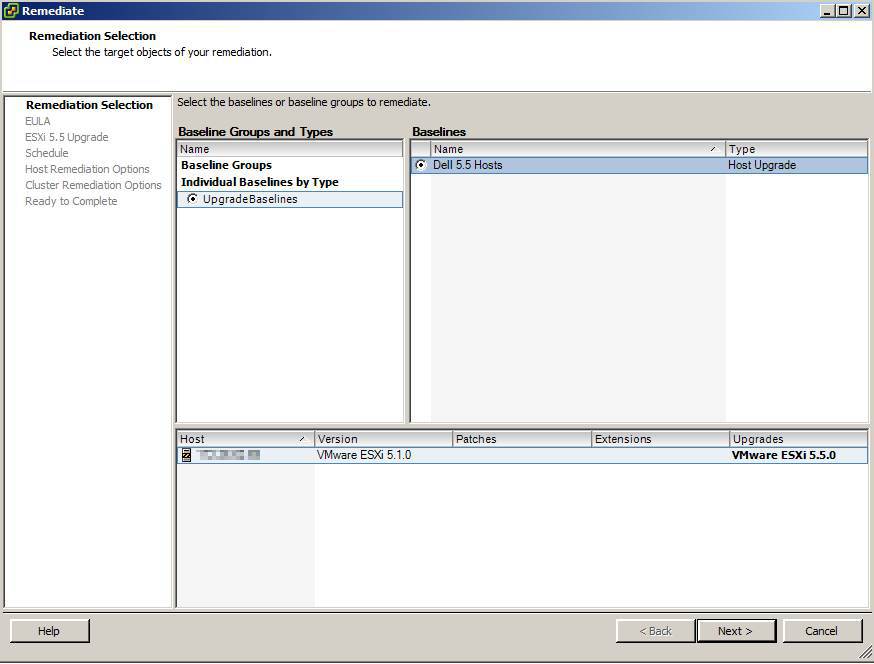
    remediate-selection
  12. Give the task a name and if you want, at this step you could schedule the upgrade for anytime. We’ll go ahead and leave the default setting and run it immediately. Click “Next“.
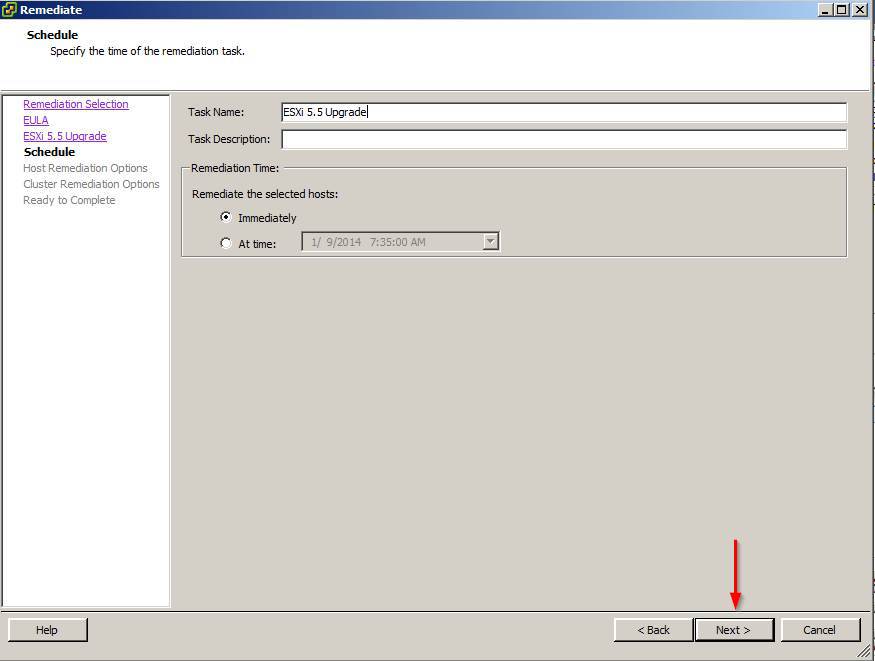
    remediate-schedule
  13. VUM will automatically place the host into maintenance mode if needed and at this screen you can change those settings if you desire. We’ll leave it as default. Click “Next“.
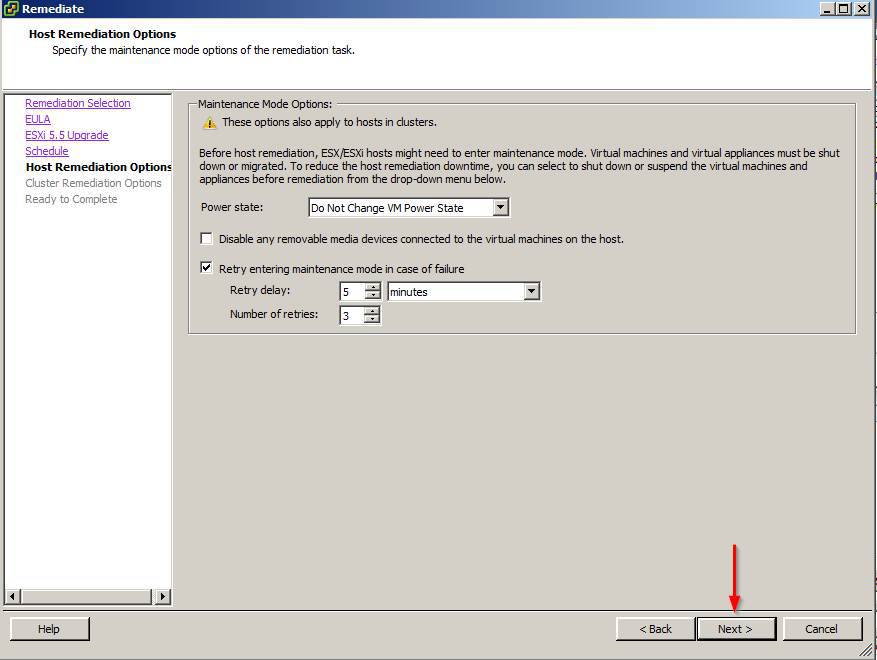
    remediate-host-maintenance-mode
  14. We’ll leave all the defaults for the Cluster Remediation Options as well. Click “Next“.
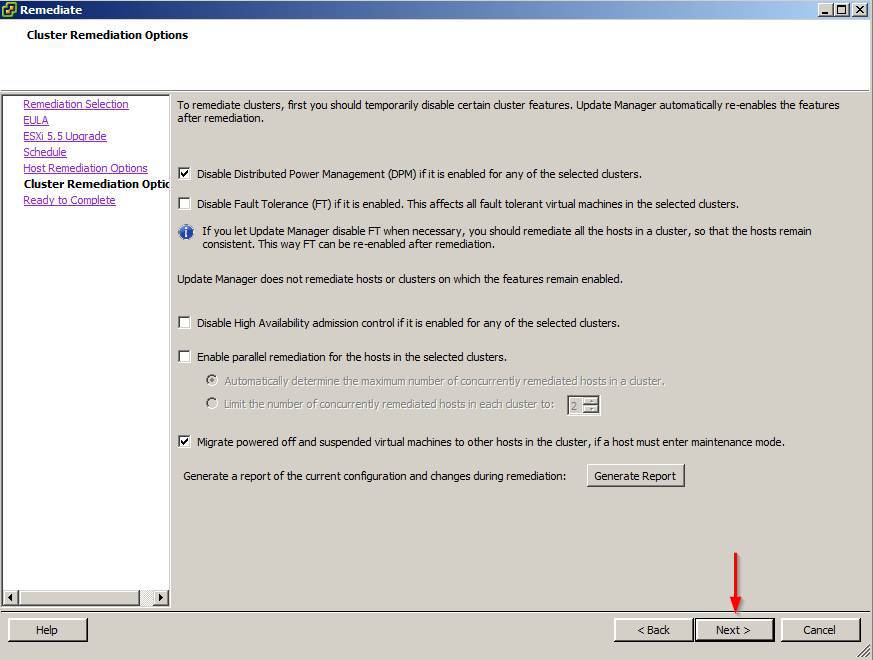
    remediate-options
  15. The only thing left to do now is to look over the confirmation and then click on “Finish“. VUM will then start the upgrade process which can take some time so go get a coffee or in my case, water and wait.
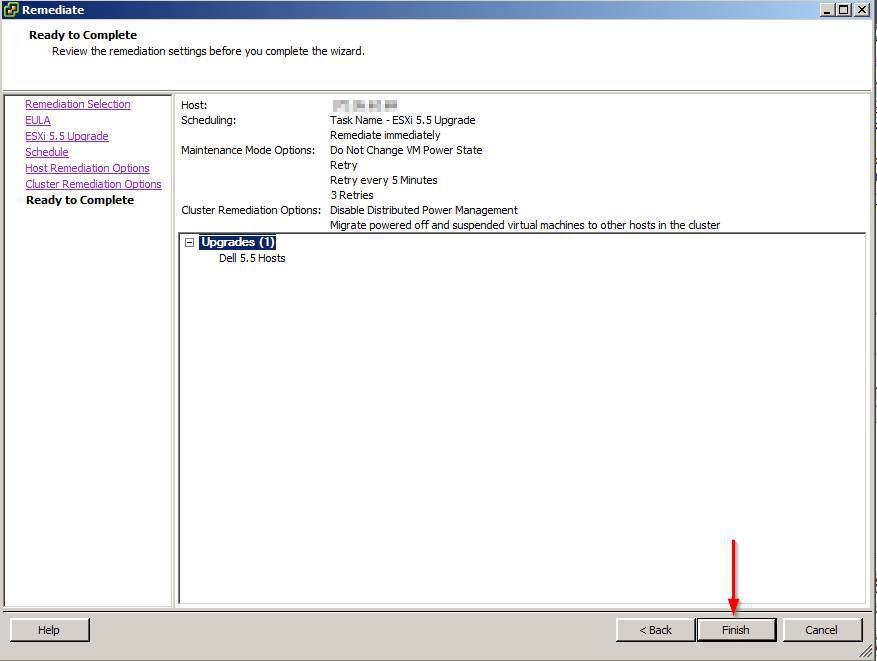
    remediate-confirmation
  16. Once finished you’re host will be running ESXi 5.5. It’s as easy as that!
    host-updated-esxi5.5

Similar Posts

  • Install ESXi 5.1 from a USB Flash Drive

    Many servers already come with a DVD/CD-ROM drive or some kind of ability to virtually mount an ISO image from a network share onto your server to then install ESXi. However, not all do or you just want to have your ESXi image readily available. Here’s a quick step by step instructions on how to use a USB flash drive to install ESXi.

    1. Download ESXi 5.1 from VMware (if you haven’t already) as well as UNettbootin.
    2. Plug in your USB Flash Drive.
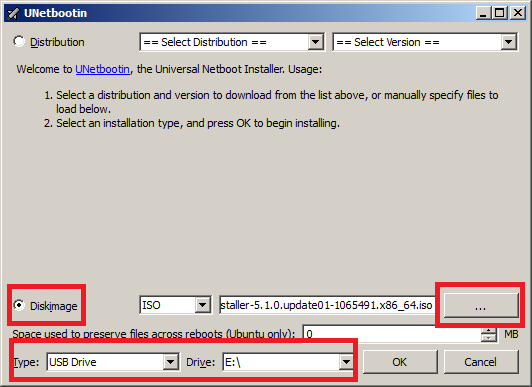
    3. Open UNetbootin and select “Diskimage”, set Type to “USB Drive”, select Drive letter of your USB flash drive, and set the path of your ESXi 5.1 ISO image. Then click on “OK”.
      unetbootin setup
    4. Read More “Install ESXi 5.1 from a USB Flash Drive”

  • VMware vSphere 5.5 Update 2 released

    vsphere 5.5 update2 released

    VMware vCenter Server and ESXi 5.5 Update 2 has just been released today with a number of fixes and additional features such as vCenter Server database support for Oracle 12c, Microsoft SQL Server 2012 Service Pack 1, and Microsoft SQL Server 2014 in vCenter Server and support for ESXi hosts with 6TB of RAM in the ESXi 5.5 update 2 release!

    Read More “VMware vSphere 5.5 Update 2 released”

  • VMware View client now availabe for Android!

    VMware has announced that they have released a View Client for Android tablets available on the Android Market now. Here are just a few of the features found on the new client.

    • A new look and feel – The View Client for Android features the NEW blue look and feel of the VMware View clients!
    • Multiple broker support – If you have more than one VMware View broker in your organization, you can can easily access your desktop from all of them via the Android client
    • Desktop Shortcuts – Quickly connect with as many as four recent desktop via shortcuts
    • Virtual trackpad – Control your desktop on a granular level just like you would control the mouse on a laptop
    • Custom keyboard toolbar – Super easy access to all of the special keys not found on the Android default keynboard
    • Honeycomb 3.x support – Made from the ground up for the new generation of Android tablets
    • Custom gestures – Invoke keyboard, scrolling, etc are as easy as ever and simple to use
    • VMware View Security Server support (best experience) – No need to have VPN when you use VMware View Security Server
    • Background tasking – Switch between apps on your tablet and come right back
  • How-to fix VMware Converter error FAILED: Unable to find the system volume, reconfiguration is not possible.

    I was recently tasked with migrating a Hyper-V machine to our VMware environment. However, each time VMware Converter was ran, the task would fail at 97% with an error “FAILED: Unable to find the system volume, reconfiguration is not possible.“.

    FAILED: Unable to find the system volume, reconfiguration is not possible

    Looking further into the virtual machine there were a number of concerns I had on the VM. One such issue which I believe might be causing the above error, is that the system volume drive was on drive 0 while the “C:” drive was on drive 1. Whereas these are typically on the same drive in most Windows installs.

    Below are the steps I took to fix this VM and made the migration from Hyper-V to VMware a success.

    Read More “How-to fix VMware Converter error FAILED: Unable to find the system volume, reconfiguration is not possible.”

  • Power off an unresponsive VM using ESXTOP

    Just recently we have some hardware issues in our primary datacenter and during that time had a few VM’s that became unresponsive and needed to get them back online. The VM’s had stopped responding to the normal vSphere commands to reboot, shutdown or even restart. I didn’t want to power cycle the entire ESXi host and instead just power off an unresponsive VM.

    Here is a quick and easy way to do just that using ESXTOP.

    Read More “Power off an unresponsive VM using ESXTOP”

  • Shrink a thin provisioned VMDK disk

    When maintaining a Horizon View environment I like to keep my parent images as small as possible and over time a thin provision disk can start to grow on you if you don’t watch it – be it from downloading installers, updates, or even running disk defrag. While there isn’t a simple, one click button in the View Administrator Console there is a fairly easy manual method using vmfkstools.

    Before we can use “vmkfstools” to shrink the VMDK file we must zero out any unused space on the thin provisioned disk. A simple way of doing this is by using a free utility called SDelete from Sysinternals.

    Read More “Shrink a thin provisioned VMDK disk”

Leave a Reply

Your email address will not be published. Required fields are marked *

2 Comments