How-to fix VMware Converter error FAILED: Unable to find the system volume, reconfiguration is not possible.

I was recently tasked with migrating a Hyper-V machine to our VMware environment. However, each time VMware Converter was ran, the task would fail at 97% with an error “FAILED: Unable to find the system volume, reconfiguration is not possible.“.
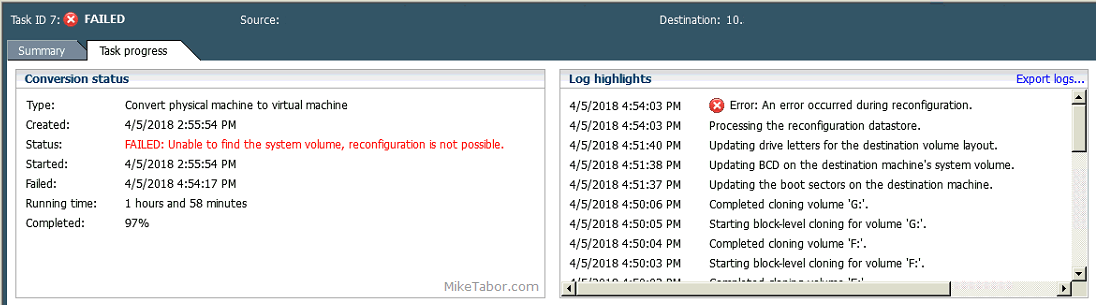
FAILED: Unable to find the system volume, reconfiguration is not possible

Looking further into the virtual machine there were a number of concerns I had on the VM. One such issue which I believe might be causing the above error, is that the system volume drive was on drive 0 while the “C:” drive was on drive 1. Whereas these are typically on the same drive in most Windows installs.

Below are the steps I took to fix this VM and made the migration from Hyper-V to VMware a success.

Rebuild boot record to resolve, FAILED: Unable to find the system volume, reconfiguration is not possible.

  1. Attach the server .ISO to the newly migrated virtual machine in VMware and boot from that image. You may need to change the boot order, in order for the VM to boot from the ISO.
  2. Now click on Next at the language, time, keyboard prompt.
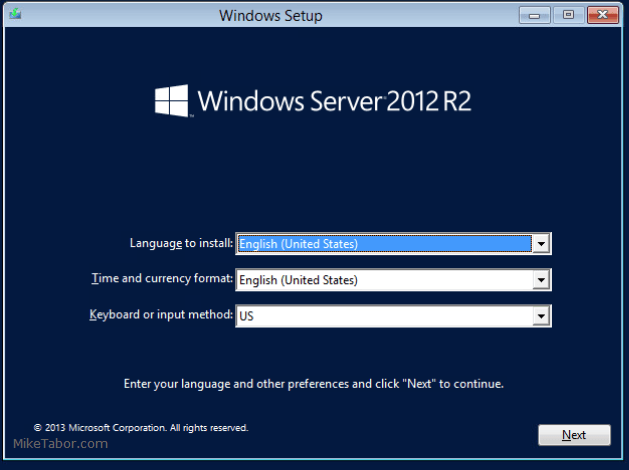
    select language, time, keyboard
  3. Then, click Repair your computer in the lower left corner.
    select repair computer
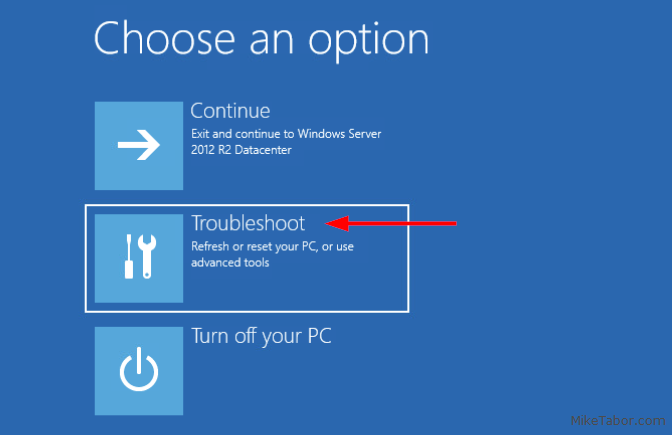
  4. Next, select Troubleshoot.
    choose an option troubleshoot
  5. Now click on Command Prompt under Advanced options.
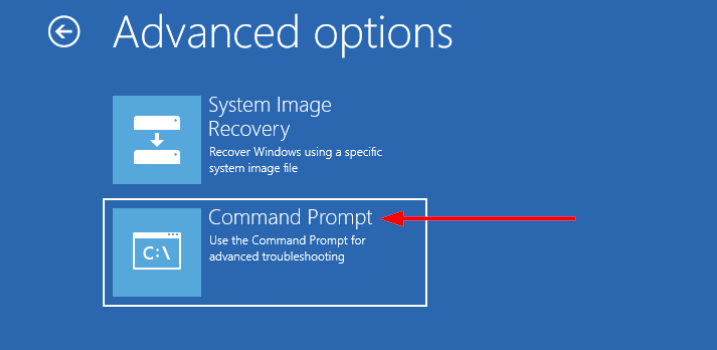
    advanced options command prompt
  6. In the command prompt, type in the following commands:
    Bootrec /fixmbr
    Bootrec /fixboot
    Bootrec /scanos
    Bootrec /rebuildbcd
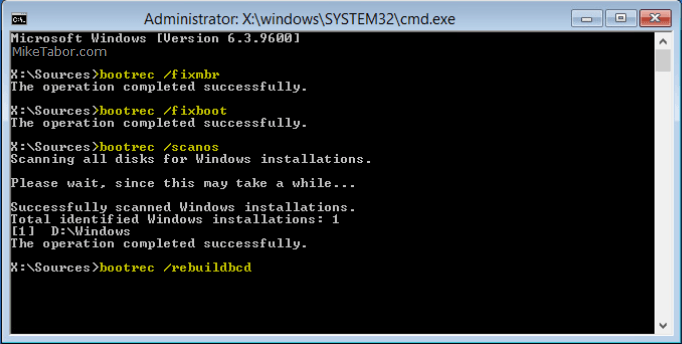
    restore commands

  7. Finally, type EXIT in the command prompt and restart the virtual machine.

After the virtual machine rebooted, Windows Server loaded without issue and I was able to complete the migration by re-IPing the VM and updating DNS records.
Similar Posts

  • HTML5 Embedded Host Client, this looks promising

    It’s no secret many people have really disliked the vSphere web client, it’s very sluggish, clunky, and based on flash (flash comes with it’s own security issues). It was rumored and highly hoped that vSphere 6 might be re-written in HTML5, but sadly this didn’t and hasn’t happened yet. While vSphere 6 did improve a bit on the web client the issues many people have had with it in the past still remain today.

    Enter the VMware HTML5 Embedded Host Client fling. I’ve been using and following this fling for a while now and have really enjoyed it and with each release it keeps getting better and better.

    The Embedded Host Client fling is based on HTML5 which allows it works great across all kinds of platforms, it’s fast, responsive, and doesn’t require any plug-ins – YES the VM console works great. If this happens to be a look of what’s to come in a new VMware vSphere web client, then a client is looking very promising!

    If you haven’t tried it yet, you should. It’s extremely easy to install and doesn’t even require a reboot just follow these simple instructions.

    Read More “HTML5 Embedded Host Client, this looks promising”

  • VMware Update Manager U3e upgrade failing? Un-install it!

    VMware Update Manager U3e error

    I was recently upgrading a VMware environment from vCenter Server Update 3b to Update 3e and during the scheduled change I had also planned on upgrading VMware Update Manager to Update 3e and ran into the following error:

    VMware Workstation unrecoverable error: (vthread-3)
    GetProcAddress: Failed to resolve ENGINE)load_aesni: 127
    You can request support.

    Looking for a possible solution at the VMware Knowledge Base came back with no results and to error message wasn’t overly useful either with “VMware Workstation unrecoverable error: (vthread-3)” as Workstation wasn’t installed on this server.

    Read More “VMware Update Manager U3e upgrade failing? Un-install it!”

  • Thank you VMware Community!

    VMware vExpert 2014

    So far, 2014 has been a very rewarding year for a number of reasons, two of which has happened in just a week or two span. First, Eric Siebert (@ericsiebert) announced on March 27th, this years results of the 2014 Top VMware & Virtualization Blog voting. My first year entered into voting and made it to 71st place! A huge thanks goes out to not only Eric but just as much so to everyone who voted for me!

    To top it off, yesterday VMware announced 2014’s first quarter VMware vExpert list. While vExpert isn’t a technical certification or even a general measure of VMware expertise. The VMware judges selected people who were engaged with their community and who had developed a substantial personal platform of influence in those communities. There were a lot of very smart, very accomplished people, even VCDXs, that weren’t named as vExpert this year. VMware awarded this title to 754 people this year and on that list of many impressive names you’ll find yours truly, Michael Tabor!

    I’m both honored and humbled by both lists. It’s a great feeling to be recognized by not only my peers through the voting in the Top vBlog but also by VMware themselves through the vExpert title.

    So again THANK YOU very much to the entire VMware community, a spectacular community indeed, and congratulations to everyone else that made the Top vBlog and vExpert lists!

  • VMUG EVALExperience, the new VMware VMTN

    VMUG EVALExperience

    Long ago VMware offered a program called VMware Technology Network (VMTN) which was very similar to Microsoft’s TechNet, which allowed you to download and run various VMware software within your home lab for a small yearly fee. Just like the Microsoft TechNet, the VMware VMTN program was eventually closed. From the time the VMTN program closed many people have begged and pleaded with VMware to bring the program back, there is even a long forum thread asking VMware to bring VMTN back. Though it never did… until now.

    Read More “VMUG EVALExperience, the new VMware VMTN”

  • Edit Virtual Hardware 10 VM’s with vSphere 5.5 U2 client

    When ESXi 5.5 came out so did a new virtual hardware version, 10, as well. However the ability to edit virtual machines have have been upgraded to virtual hardware 10 was restricted to only the vSphere web client. In some cases people have put off upgrading to virtual hardware 10 either for dislike of the web client or knowing you cannot edit the VM in the event of the web client being down.

    That all changes today, VMware has just released vCenter 5.5 Update 2 today and one of the “resolved issues” in today’s release notes is the ability to now edit virtual machines with Virtual Hardware 10 using the vSphere thick (C#) client.

    edit virtual hardware 10

    Read More “Edit Virtual Hardware 10 VM’s with vSphere 5.5 U2 client”

Leave a Reply

Your email address will not be published. Required fields are marked *

3 Comments

  1. Do you mean to run this on the existing source VM, not on the failed target VM? I’m not 100% clear on what you mean when you say “Attach the server .ISO to the newly migrated virtual machine in VMware and boot from that image.” How do you perform this if the conversion failed and the destination VM cannot boot?

    1. Mike,

      You are doing exactly as I’ve pointed out “Attach the server .ISO to the newly migrated virtual machine in VMware and boot from that image” this is because the transfer is done using VMware Converter however the boot loader on the transferred machine is busted. Thus the need to mount the ISO on said VM and repair it.

      Hope this helps!

      -Michael

  2. I’m running into this for the first time. I have a set of two test and two production physical HP servers to convert. The two test HP servers converted normally. However, the two production servers are having this Failure. No amount of Option changes in the conversion wizard have resolved it. I’ll be trying again today and trying the options that Mike listed here and report back.

    Thank you for the article!

    -Chad